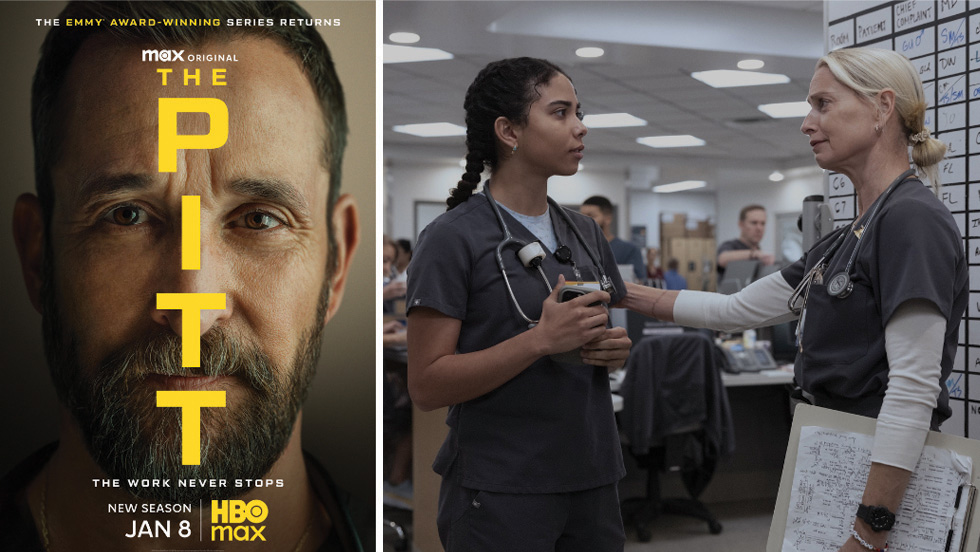
HBO’s medical drama The Pitt has been praised for its multifaceted characters and intense storylines set in the emergency department (ED) of a Pittsburgh, Pennsylvania, trauma center. Conceived by actor Noah Wyle, who also stars in the show, the drama has also been praised for the accuracy of its depiction of a fast-paced emergency medical environment.
But how realistic is it really?
We asked two faculty members from the Adelphi University College of Nursing and Public Health with experience working in an ED—Associate Dean Jordan Yakoby, EdD, and Clinical Associate Professor Daniel McWeeney, DNP—to assess some key scenes in the show.
While the focus is often on the doctors, nurses are often depicted as critical members of the ED staff, especially tough-as-nails charge nurse Dana Evans. “By and large, a lot of the scenes are pretty realistic,” said Dr. Yakoby. “They are real scenarios you’d see in an emergency department.” If anything, he said, nurses are not depicted as prominently as they should be in an actual ED, where they handle some of the frontline cases doctors handle in the show. “There’s probably some artistic liberty, since many of the main characters are physicians and you need to show them in as many scenes as possible.”
Dr. McWeeney agreed that the show gets the intensity and pace of the ED right—even if it exaggerates a little. “The show truly reflects the chaos and volume of patients seen on a daily basis,” he said. “However, it does seem to depict more of the critical cases, which is not always the case in a given shift.” On the other hand, as an experienced ED nurse practitioner, he’s had shifts as intense as the ones that appear on the show, with multiple patients requiring lifesaving interventions.
Adelphi Theatre Grad Plays a Starring Role
Adelphi’s connection to The Pitt runs deeper than our faculty expertise. Lucas Iverson ’17, a BFA in theatre arts graduate, plays cocky medical student James Ogilvie in the show’s second season. In a recent interview, Iverson highlighted a pivotal scene from episode six where a nurse out-diagnoses a room full of MDs—a moment he feels reflects the vital importance of nurses in emergency rooms. “The nurses always know,” he noted.
Here are five scenes from the show, along with comments from Dr. Yakoby and Dr. McWeeney. (Spoilers ahead!)
Season 1, Episode 1—Nurses Perlah and Princess speak Tagalog
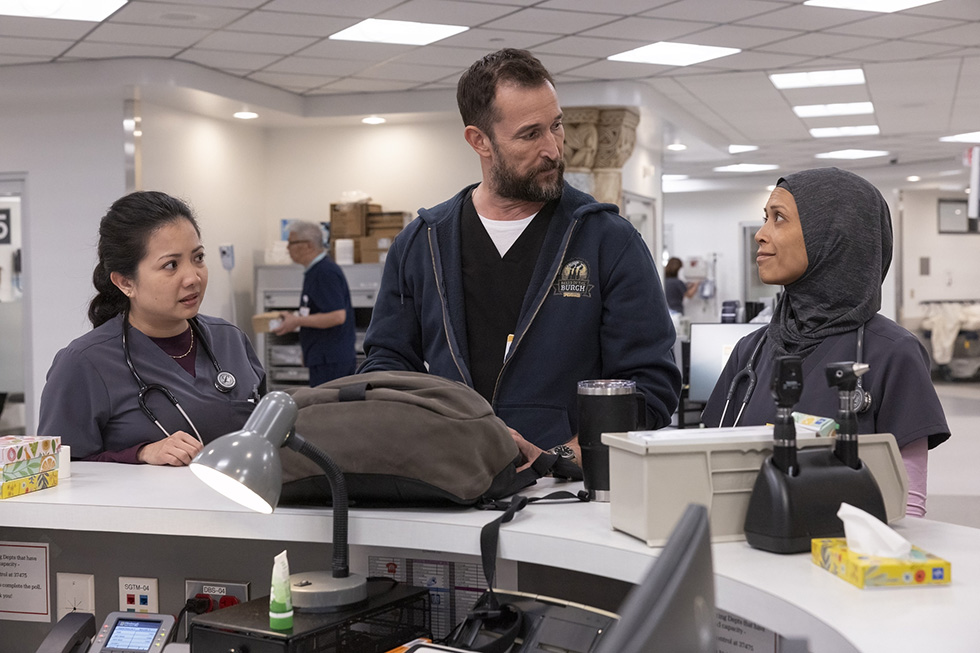
From the first episode, Filipina nurses Perlah and Princess switch into their native language while discussing cases or reacting to doctors’ decisions. Their tone is typically wry, offering a glimpse into the tight bonds among the nursing staff.
Dr. Yakoby: You probably have a lot more camaraderie between nurses and medical staff than you do in other places in the hospital, just because of the close proximity, so it definitely leads to more informality at times. Of course, there’s gossip that can occur, though I don’t know that people just switch into another language in front of the person they are talking about.
Dr. McWeeney: Multilingual nurses absolutely use language like this during shifts, but in my experience it’s more of a friendly conversation than patient-related. That said, nurses are always communicating, and especially experienced nurses may discuss and question providers’ assessments and orders placed based on a patient’s chief complaint.
Season 1, Episode 9—An aggressive patient assaults Dana
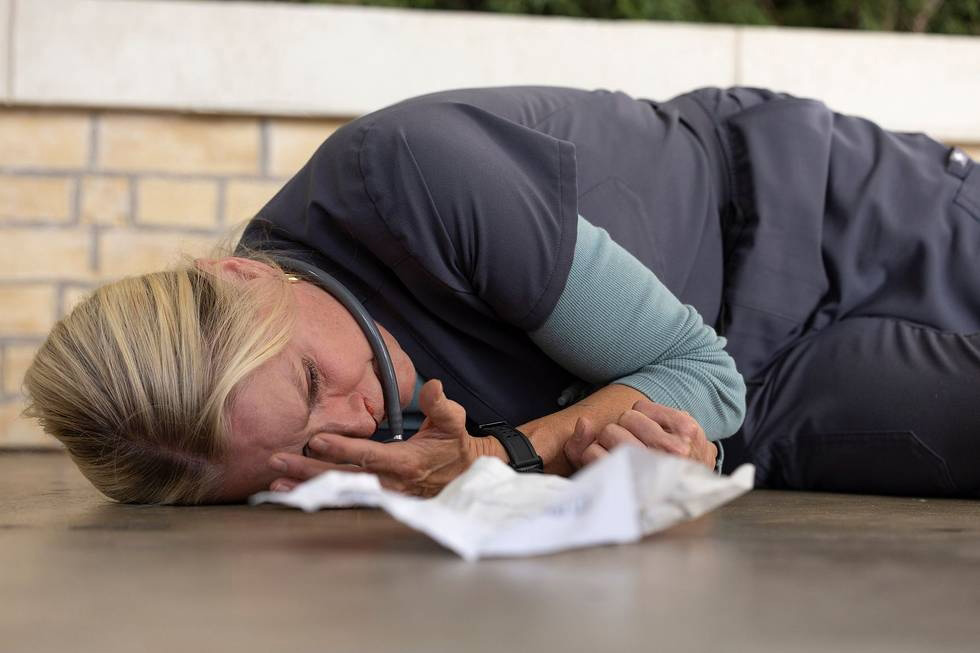
A patient’s frustrations boil over and he eventually assaults nurse Dana. She later returns to the floor, with colleagues noting how common such incidents can be.
Dr. McWeeney: Unfortunately, this is very common. On most of my shifts, security alerts are escalated due to an aggressive or threatening patient. Most of the time, it’s verbal, but I have had two or three colleagues who have been physically assaulted. Our ED has significantly increased security officer presence, and staff are trained for active shooters as well.
Dr. Yakoby: It’s a documented, well-known problem. I’ve been assaulted before—and more than one time. Usually it’s someone with a psychiatric condition or impaired by alcohol or an illicit substance. Larger hospitals and trauma centers have security in the ED at all times, and they can respond quickly, but they can’t be everywhere, and sometimes you just don’t know when someone is going to get aggressive.
Season 2, Episode 6—Perlah reacting to Louie’s death
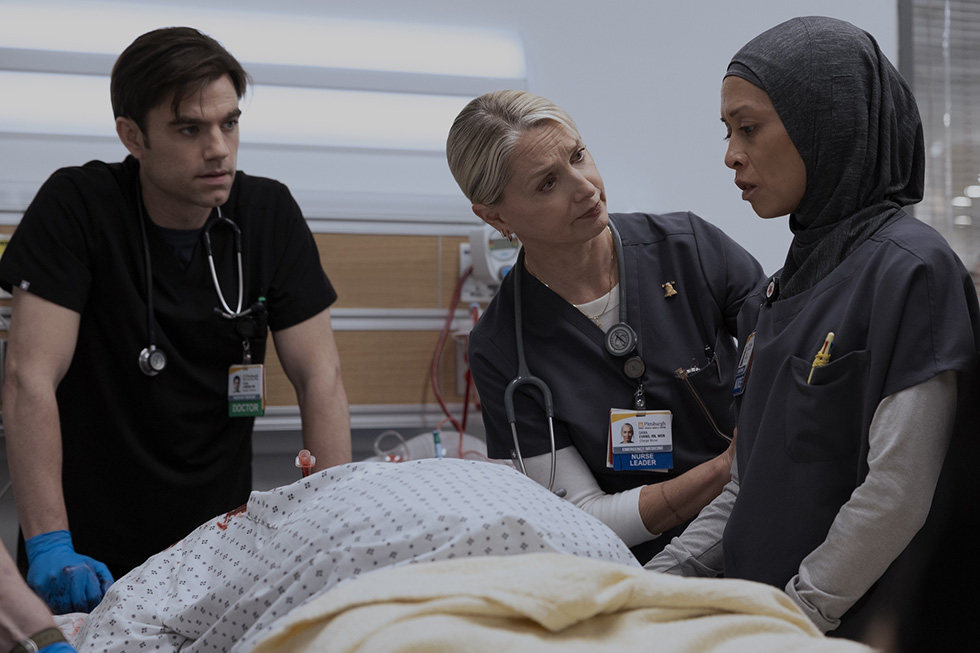
It’s 12:07. Robby calls it. Louie is gone. (Warrick Page/HBOMAX)
After regular patient Louie dies from alcohol-related complications, nurse Perlah visibly struggles emotionally. Dana and other colleagues make adjustments to compensate for her.
Dr. Yakoby: A lot of times you don’t spend more than a few hours with a person, so you don’t develop a super-close relationship. But there are certain circumstances that are upsetting when a patient passes away. Many “frequent flyers” who come in regularly for substance abuse are difficult to get along with, but there are some who are more pleasant and easy to build a relationship with, and so there can be cases that hit home.
Dr. McWeeney: Grief is something everyone handles differently, and something you have to learn to cope with while working on a shift. In my experience, there have been a few shifts, especially during the pandemic, where I just needed to run to the bathroom and cry or shut the lights off and reset with a few deep breaths. Most hospitals now do have a team of employees that comes to support staff after a traumatic event. Ours is called Team Lavender, and they provide staff with lavender oils, teas and chocolates to help alleviate stress.
Season 2, Episode 6—Donnie teaching suturing to doctors
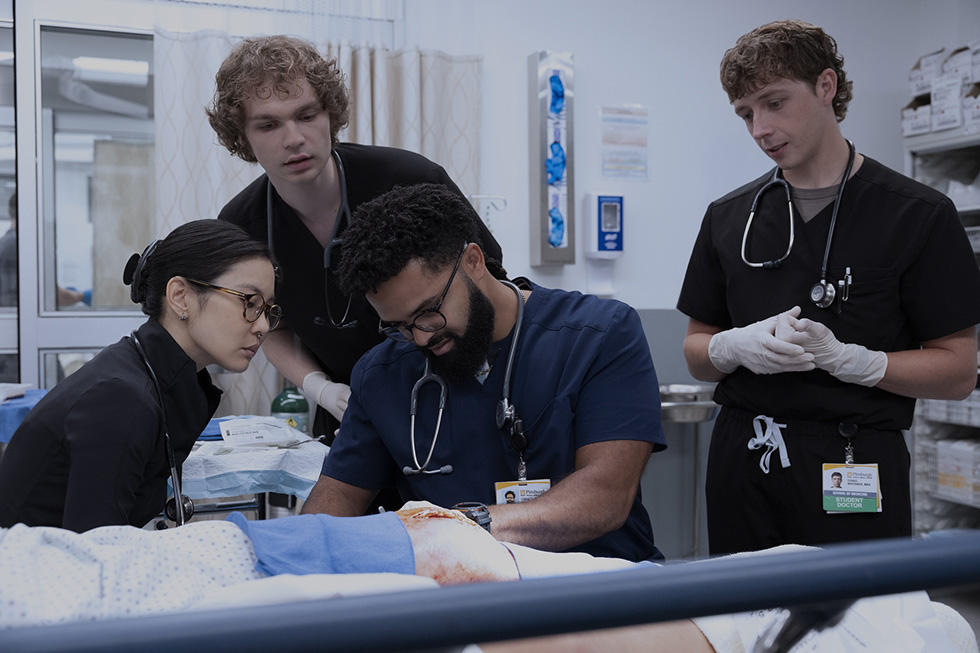
Adelphi theatre grad Lucas Iverson ’17, second from left, observes as Nurse Donnie steps in to guide physicians through proper subcutaneous (sub-Q) suturing technique during a challenging case. This scene highlights the depth of hands-on skill many nurses develop over time.
Dr. McWeeney: Nurses are always learning and training. While RNs do not suture, they are often precepting a new nurse on the many unique skills needed in the ED, such as placing an intravenous catheter. There is always the pressure to see more patients, and so I might not have the time to go through each step in depth in the moment, but I will always try and recap later in the shift as time allows.
Dr. Yakoby: Having a nurse actually do part of the procedure would not be typical. But if you have a very seasoned nurse and a junior resident, you might have a nurse guide them through a practice or get you the resources to help you do a procedure that you’re not doing in the correct way. Certainly, physicians-in-training would be smart to listen to experienced nurses if they want to be successful.
Season 2, Episode 7—Dana guides a sexual assault exam
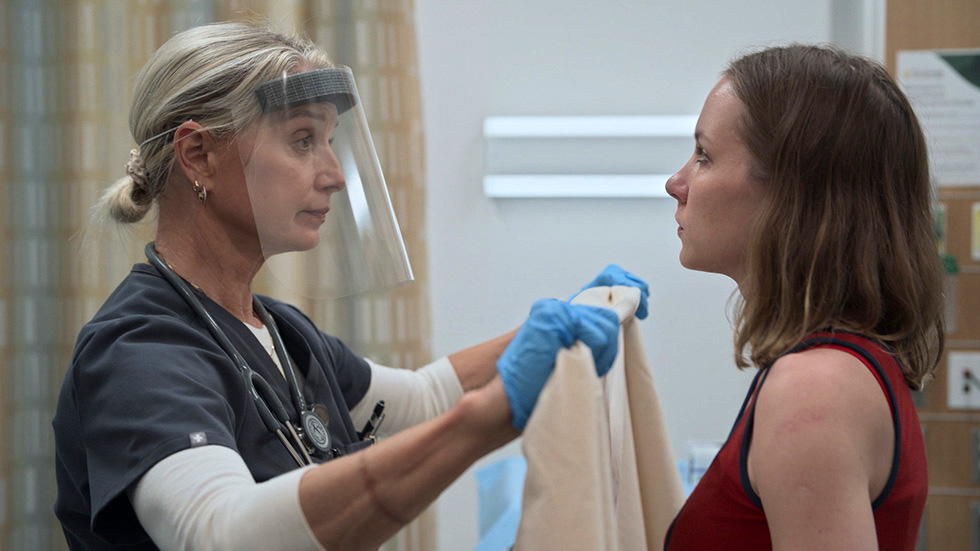
As a sexual assault nurse examiner (SANE), Dana takes the lead on guiding a sexual assault survivor through a forensic exam, displaying compassion throughout a highly technical procedure.
Dr. McWeeney: The portrayal of the scene is accurate. Time is of the essence when it comes to a complicated case such as sexual assault. It is extremely sensitive, and there is heightened concern for making a mistake or fear of litigation that requires extra training to become a SANE. Dana provided a sense of trust and comfort and a step-by-step approach which showed the patient what to expect.
Dr. Yakoby: This kind of trauma-informed care is really where nursing shines. There’s a lot of emotional support you may need to give the patient, ensuring their comfort and privacy, and I think this was a good depiction of that. Everyone usually tries to be intentional and thoughtful with these patients, as they are experiencing a very difficult moment in their lives.
Adelphi’s Nursing and Public Health Programs
Whether you want to be in an action-packed ED or provide care in settings from schools to clinics to physician’s offices—or you want to educate the next generation of healthcare workers—the Adelphi University College of Nursing and Public Health has a program for you.
Learn how to serve our aging population with our gerontology programs (Adult Gerontology Primary Care Advanced Certificate, Adult Gerontology Primary Care Nurse Practitioner doctoral or graduate on campus or online); get a broad understanding of healthcare with undergraduate Health Sciences; be on the cutting edge of technology with healthcare informatics studies (Healthcare Informatics graduate program or advanced certificate, both online); pursue a nursing degree (undergraduate, doctoral or Accelerated Nursing—now offered in Garden City and at our Manhattan Center); or study Psychiatric Mental Health (graduate, doctoral or advanced certificate) or Public Health (minor and MPH on campus or online).