A leader in the field of energy conservation and recycling, Adelphi University teaches by example. The University is in the forefront of developing programs and policies that will ensure an environmentally friendly and fuel efficient environment.
Green at the UC
Environmentally friendly materials—and a major recycling event.
Roof Challenge, Solar Opportunity
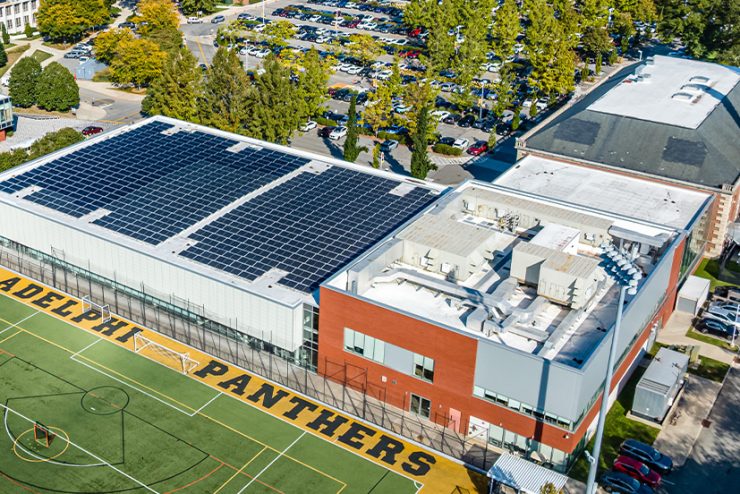
From structural challenge to green energy victory—the Center for Recreation and Sports is now home to a massive new solar installation. Discover how this solar array will provide renewable solar electricity for the University over the next 20-plus years.
The University is committed to:
- Decreasing our reliance on fossil fuel
- Reducing energy use and improving energy efficiency
- Utilizing alternative forms of energy wherever possible
- Decreasing the production of emissions that contribute to climate change
- Conserving energy in information technology and computer usage
- Pesticide-free grounds, relying 100% on natural, organic techniques
- Recycling efforts
- Greener construction
- Harnessing solar energy
- Using Green Seal® products
- Replacing Public Safety patrol vehicles with hybrid vehicles
- Encouraging the use of public transportation by providing free shuttle service to all major hubs for students, faculty and staff
Over a decade ago, Adelphi became the only higher education institution in the region to install a geothermal heating and cooling system that decreased New Hall’s dependence on electricity by an estimated 30%.
We continue to search for new ways to improve energy efficiency and to use products that are beneficial to us and to the environment. Adelphi was inspected by the Environmental Protection Agency in 2006 for compliance with all regulations dealing with health, environment and disposal of hazardous waste. Adelphi was the only educational institution in the region to pass this inspection without any fines or penalties.
Sustainability in Action

Dining Services’ Sustainability Commitment
Dining Services takes an aggressive approach towards maintaining an environmentally sound dining program and is constantly seeking new and improved ways to further develop our environmental plan.
Sustainability News