What We Do at Bridges to Adelphi
The Bridges to Adelphi program (called Bridges for short) aims to promote a sense of belonging and acceptance for our students.
The Bridges to Adelphi Program offers individualized comprehensive academic, social and vocational services that are designed to make the transition from high school to college easier for students who have autism spectrum disorder, a nonverbal learning disability, or problems with executive functioning and socialization.
The supportive Bridges to Adelphi staff is dedicated to teaching strategies and skills to students during meetings so they can learn how to utilize their skills on their own and be more independent. We foster independence and self-determination. While we encourage students to self-advocate, we always provide assistance if they request it.
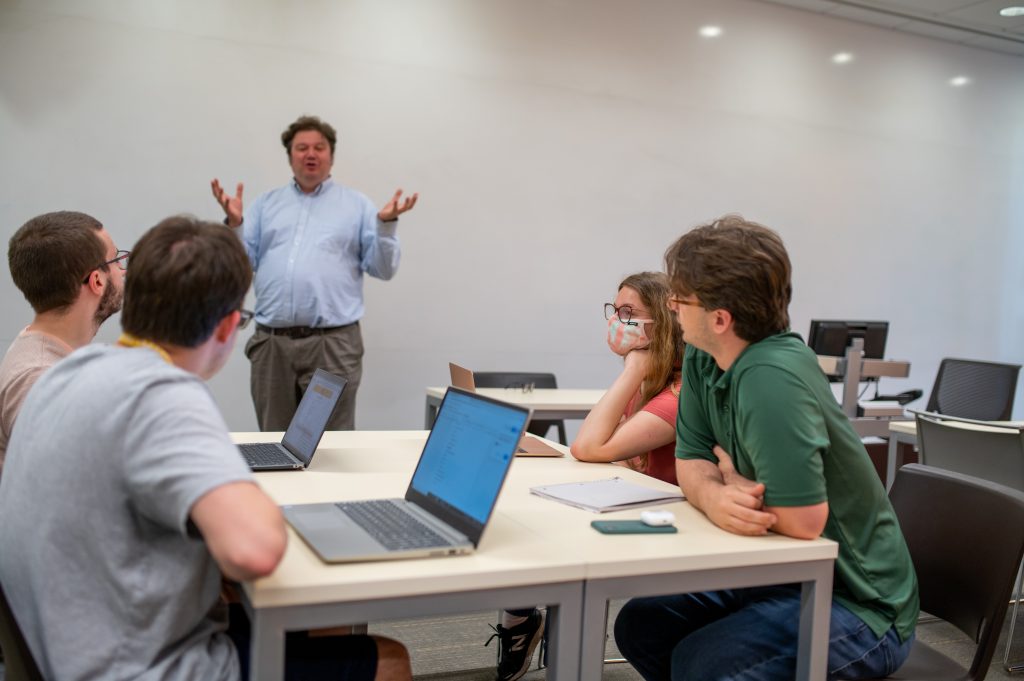
Academic Coaching
Your academic coach is a Bridges student worker who will help you with executive functioning. Your coach will:
- Review your assignments, help ensure they are submitted, track your grades and make sure academic accommodations are in place
- Help you manage time effectively, build your communication skills, and help foster your interpersonal development, problem-solving abilities and self-care.
- The Bridges program has a strong relationship with our math and computer science department, offering math and computer science tutoring as well
Learning Strategy Coaching
Your learning strategy coach is a dedicated student worker who will reinforce what you learn from your academic coach while also helping you:
- Prepare for exams
- Build research and library skills
- Develop academic success practices
- Address any areas of academic avoidance
Social Coaching
You’ll meet 1:1 with a social coach anywhere between 30 minutes to 45 minutes a week. In these meetings, you will discuss individualized social goals and identify actionable steps to take in achieving those goals. Below are some examples of ways students have utilized social coach meetings to:
- Carefully assess behaviors and transform any negative tendencies and beliefs
- Nurture positive connections with your peers
- Improve communication skills
- Gain valuable insights into interpersonal relationships and acquire new abilities to decipher social cues and communicate effectively
Vocational Coaching
Your vocational coach will provide comprehensive support, including optional fully standardized vocational testing to provide insights into your ideal major, potential career path and most suitable work environments. You can also receive individual vocational assistance with:
- Résumé writing and job interview skills
- Completing job applications
- Finding internships and job placements on and off campus
- Job coaching and meeting with the student’s supervisor to assess their job performance
- Learning what it means to be an employee and how to be a good one
- Professionalism in the workplace
- Effective communication and nonverbal communication skills
Bridges, rather than running the lives of the students, pushes the students to develop life skills to help manage their own lives. With that help, I was able to easily handle the transition from college to career life.
Research and Promotion
The mission of the Bridges Research Program is to promote the efficacy of Bridges to Adelphi services using empirical evidence. To these ends, the Bridges Research Program performs internal reviews, conducts research for publication and presentation to the scientific community, and develops effective grant proposals and grant reports to fund Bridges to Adelphi services.
Support Resources
A little support can go a long way. In addition to the services provided by the Bridges to Adelphi Program and the Student Access Office, the following are links to neurodiversity resources outside of Adelphi:
- Integrate: Employer Training and Partnership
- Asperger Syndrome and High Functioning Autism Association: AHA Association provides support and information for families, individuals and professionals affected by autism spectrum disorder and other pervasive developmental disorders through a hotline, support groups and conferences.
- Autism Speaks: Dedicated to funding research into the causes, prevention, treatments and a cure for autism; increasing awareness of autism spectrum disorders; and advocating for the needs of individuals with autism and their families.
- Autism Spectrum News: A voice for bringing you a new and trusted source of news, information, education, research, advocacy, and resources about the promising and ever-changing world of autism spectrum disorders.
- Wrong Planet: The web community designed for individuals (and parents/professionals of those) with autism spectrum disorder and other neurological differences.
- Interactive Autism Network (IAN): An online project that brings together people affected by ASDs and researchers; the goal is to facilitate research that will lead to advancements in understanding and treating ASDs
- National Debt Relief: The National Debt Relief has a new financial resource guide for families of individuals with autism. In this guide, you will find advice for saving money on medical care and day-to-day expenses, as well as an introduction to programs and funds meant to support families of individuals with ASD.
Frequently Asked Questions About the Bridges to Adelphi Program
We want to answer all of your questions about Bridges to Adelphi. If you can’t find the answers you need below, please contact us.
The Bridges to Adelphi program offers individual and group academic, social and vocational support services to Adelphi University students with neuro-social and other nonverbal disorders, including those on the autism spectrum.
We are called the Bridges to Adelphi program because we help “bridge the gap” between high school and college, and then college and the “real world.”
To be part of the Bridges to Adelphi program, the student must first be accepted to Adelphi University. After acceptance, the student must inform the Office of University Admissions of their interest in enrolling in the Bridges program, or they may contact Bridges to Adelphi directly at bridges@adelphi.edu.
The Bridges to Adelphi program is a fee-for-service program, the cost of which is in addition to the costs of tuition, room, board and books, as well as other University fees.
Students who enroll in Bridges to Adelphi do not need to provide any diagnostic documentation.
The Bridges program does not provide accessibility accommodations. Any Adelphi student who needs accessibility accommodations must provide documentation of disabilities to the Student Access Office.
The Bridges program requests that students give us consent to speak to the Student Access Office (SAO) if there is a problem accessing their accommodations.
The Bridges to Adelphi Program does not provide mental health counseling. Students who need that will be referred to the Student Counseling Center.
The Bridges program requests that students give us written consent to speak with the Student Counseling Center to coordinate services and if the student is having an emergency. We also have a designated counselor in the Student Counseling Center.
Bridges students may choose to live on campus or commute. Those interested in living on campus should contact the Office of Residential Life and Housing for additional information.
Bridges to Adelphi program staff members train the resident assistants (RAs) and residence hall directors (RHDs) in ways to support our students. Bridges students are not paired to live in a residence hall together, although they can choose to become roommates.
With a student’s request and written consent, the Bridges to Adelphi program will contact faculty members regarding specific issues or problems, as well as request monthly reports on student academic performance.
Np, Bridges to Adelphi students must meet the same academic standards and criteria as all other Adelphi students.
With student’s written consent, parents can contact the director of the Bridges to Adelphi Program.