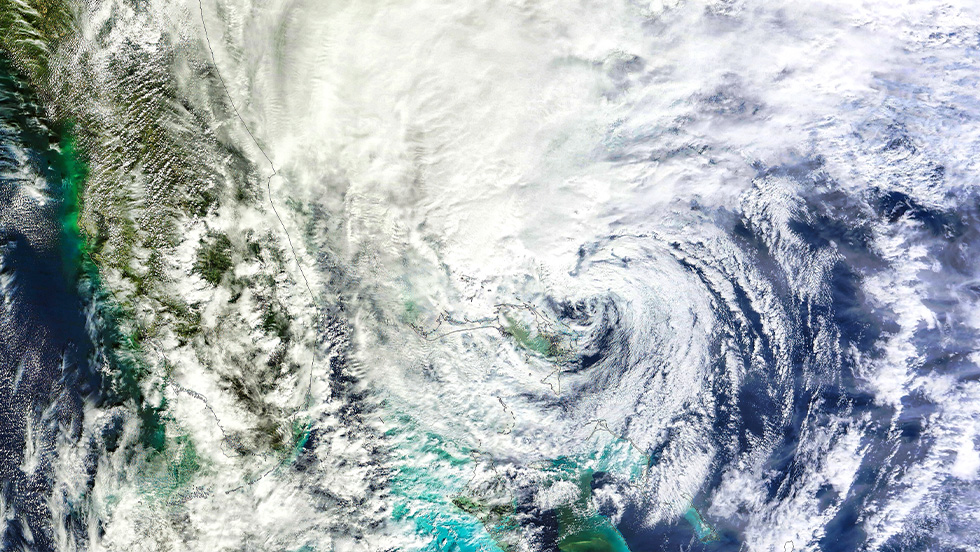
Adelphi University researchers surveyed more than 1,500 university students, faculty and staff to learn how disaster-related stress affects each group.
For millions of students and teachers around the world, the COVID-19 pandemic was more than just a test of online learning skills. The initial lockdown caught institutions off guard, and subsequent months of conflicting information and shifting policies piled stress onto already struggling communities.
Renée Rawcliffe, social work PhD candidate, director of continuing education and professional development, and adjunct professor in the Adelphi University School of Social Work, and Beverly Araujo Dawson, PhD, professor of social work, could see how deeply their own students were impacted not only by COVID-19, but by other major disasters such as Hurricane Sandy. “We’ve watched students try to stay focused while dealing with uncertainty, fear and constant change,” they said. “Those experiences made it clear how emotionally draining disasters can be, even when we don’t always name them that way.”
Along with co-authors from the Silberman School of Social Work at CUNY Hunter and the Department of Social Work at CUNY College of Staten Island, Dr. Araujo Dawson and Rawcliffe began studying the influence of cumulative disaster-related stressors on depression among college students and faculty. The ensuing article, “Investigating the Relationship Between Disaster Preparedness Knowledge, Disaster Related Stress, and Post-Disaster Depression Among Students and Faculty in Higher Education” (Social Work in Public Health, November 2025), strove to address the “one big question that kept coming up” in discussions with colleagues: Does feeling more prepared for disasters actually help people cope better afterward?
Research has shown that exposure to either acute or prolonged disaster can carry significantly elevated rates of mental health issues, including anxiety, depression and PTSD, even years after the initial event. It’s also shown that disaster preparedness does mitigate some of these effects. But Dr. Araujo Dawson and Rawcliffe noticed that no work specifically explored the disaster-related experiences of students, faculty and staff in American higher education.
“Disasters are never experienced equally; they amplify existing inequalities,” Dr. Araujo Dawson noted. “With this research, I was excited about the opportunity to look not just at overall stress and depression, but at how preparedness knowledge might serve as a protective factor, particularly for groups who are often overlooked in disaster planning.”
For the study, she and Rawcliffe analyzed survey results from more than 1,500 students, faculty and staff, collected by their co-authors at CUNY during the spring and summer of 2020. Participants were assessed for stressors related to Hurricane Sandy and COVID-19. They also gave feedback on their knowledge of various COVID-19 preparedness measures, such as diagnosis, safety and treatment information; grocery and medication delivery; and access to mental health and legal services.
The team found that more than 65 percent of participants experienced stress from the cumulative impact of COVID-19 and Hurricane Sandy—and that this combined exposure produced a greater prevalence of depression than living through either disaster alone. “We expected stress and depressive symptoms to be related,” they said, “but seeing how closely they were linked really drove home how much these events affect mental health.”
The data also revealed that depressive symptoms were significantly higher for students than faculty. In addition, students were far less knowledgeable about preparedness measures than faculty or staff. Although participants who felt more informed did experience less stress, actually becoming informed isn’t simply a matter of reading up, according to Dr. Araujo Dawson and Rawcliffe. “Preparedness knowledge can be a powerful buffer, but access to that knowledge is often a privilege,” they said. “Systemic barriers like language access, economic stability and historical distrust of institutions often leave marginalized communities with less ‘preparedness capital.’”
However, the two feel strongly encouraged by their results, which indicate that disaster preparedness is both a logistical necessity and a critical mental health intervention. “While universities typically prioritize physical safety procedures, our study suggests that the subjective sense of being ‘informed’ can significantly mitigate emotional distress.”
As climate-related disasters increase, disaster-resilient campuses must be built with a justice-oriented framework in mind, the researchers argue. That means intentionally redistributing knowledge and resources to those who have been historically excluded. “There are concrete steps universities can take, but we can’t just provide the information,” Dr. Araujo Dawson and Rawcliffe said. “We have to ensure it reaches the most vulnerable populations, who are already carrying a higher burden of disaster-related stress.”
Frequently Asked Questions
Yes. In a study led by Adelphi University social work researchers, participants who felt more informed about preparedness measures experienced less stress. Beverly Araujo Dawson, PhD, and Renée Rawcliffe say the subjective sense of being informed can significantly mitigate emotional distress.
Dr. Araujo Dawson, professor of social work, and Rawcliffe, a social work PhD candidate and adjunct professor in the Adelphi University School of Social Work, worked with co-authors from CUNY Hunter’s Silberman School of Social Work and CUNY College of Staten Island. They analyzed survey results from more than 1,500 students, faculty and staff, collected in spring and summer 2020. The findings were published in Social Work in Public Health in November 2025.
More than 65 percent of participants experienced stress from the cumulative impact of COVID-19 and Hurricane Sandy. This combined exposure produced a greater prevalence of depression than living through either disaster alone. Prior research has shown that disaster exposure can raise rates of anxiety, depression and PTSD, even years later.
Depressive symptoms were significantly higher for students than for faculty. Students were also far less knowledgeable about preparedness measures than faculty or staff.
Dr. Araujo Dawson and Rawcliffe explain that access to preparedness knowledge is often a privilege. Systemic barriers like language access, economic stability and historical distrust of institutions can leave marginalized communities with less “preparedness capital.” Disasters, Dr. Araujo Dawson notes, are never experienced equally and tend to amplify existing inequalities.