The director of Adelphi University's MFA in Creative Writing explains how memory, close observation and technical research shape her novels.
René Steinke, a novelist who brings her writer’s sensibility to the role of professor in the Adelphi University Department of English and director of its Master of Fine Arts in Creative Writing program, views research as a critical part of fiction writing. “As writers, we don’t codify research, but it comes into play with everything we do,” she said.
For Steinke, creative research transcends the archives. Research is reading novels that share a form, style or structure to better understand the architecture of your own work. It’s remembering an emotional truth or a physical place. It’s “paying attention to your life, how the sun looks when you wake up in the morning.”
Steinke’s literary success reflects her skills as an observer and interpreter. She has written three novels, including Friendswood (Riverhead, 2015), which was named a “great read” by NPR, and Holy Skirts (William Morrow, 2005), a National Book Award finalist. Critics have called her work “masterfully observed” (O, The Oprah Magazine), “vividly imagined” (Vogue) and “a literary coup” (Newsday). In a review of Holy Skirts, The Believer magazine declared, “René Steinke refuses the strictures of the purely historical, bypassing a biographical treatment of the Baroness in favour of a more fluid fictional ‘truth.’”
Holy Skirts is a reimagining of the Baroness Elsa von Freytag-Loringhoven, a German avant-garde artist and poet who figured prominently in the early 20th-century Greenwich Village arts scene. The book begins in Berlin’s Wintergarten cabaret, then transports us across Europe before landing in New York City, where the Baroness becomes “the first performance artist, the first absurdist fashion designer and a poet whose poems force us, as poems should, to see and hear differently” (The Chicago Tribune). She befriends Dadaist artists and writers, composing incendiary poems and taking to the streets in eye-catching costumes.
To capture Berlin’s seedy cabaret halls and the debauchery of downtown New York, Steinke researched these milieus, but also relied on her senses. Having lived in Greenwich Village while writing the novel, she said, “I was doing a lot of walking around the neighborhood, thinking about what had changed since 1917 and what hadn’t. It was an experiential process.” She also listened to the contemporary music of the time period, watched early silent films and read newspapers to “get a sense of the texture of daily life.”
Though Steinke may consult the same primary sources as her academic colleagues, she’s looking for different things: tone, story, character, even “knots,” what she terms “unsolved histories.” Often, these knots form the foundation of her work. “They invite me to come in and imagine what happened, to work within the available evidence of the historical record,” she said. “I like stories that have been buried, parts of history that have holes.”
Friendswood required research into another kind of history: Steinke’s own memory. The book is set in her hometown of Friendswood, Texas, where toxic runoff from a nearby Superfund site allegedly triggered elevated cancer levels. Steinke told the Houston Chronicle that she was “more interested in creating the essence of the place than its actual, factual geography … the particular textures of Friendswood itself: the Quaker church in the center of town, the humidity and heat, the local Mexican restaurant, the country music I heard so often in the background.”
Though the Brio Superfund site has received national media attention, “people don’t really talk about it,” according to Steinke. “It’s still hidden.” To write the book, she spoke to residents—neighbors as well as local reporters—who could bring that history back to life. She also conducted extensive technical research, seeking to understand the characteristics of Superfund sites, the scientific links between pollution and cancer, and official federal and local investigations into potential cancer clusters.
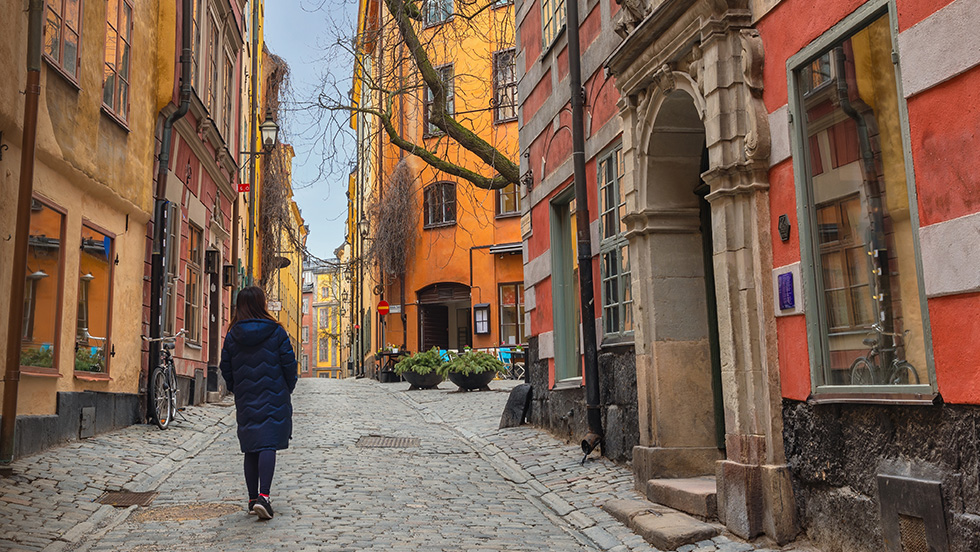
Now, Steinke is at work on a new historical novel, based on the life of Swedish artist Hilma af Klint. Last year, thanks to funding from a research grant from longtime Adelphi donor Bharat Bhisé, MBA ’78, she traveled to Sweden “to retrace the steps where af Klint walked, to see her paintings and to visit the places where she lived and worked.” She’s also preparing to inaugurate an exciting new era for the Creative Writing MFA, which has moved to Adelphi University’s Manhattan Center. As part of the MFA program’s low-residency structure, students and faculty will gather in person just before each semester for intensive, one-week residencies at the Manhattan Center. Students will then work within an individualized, remote curriculum during the semester. This format allows students to master their craft while benefiting from a flexible academic schedule—and the richness of New York City’s literary life. “Because the city is home to so many publishers and literary nonprofits, we’re able to introduce our students to many practical aspects of the writing world.”
Steinke is inspired by her work with other writers pursuing their own paths in creative research. Two of her students are writing novels set in far-flung times and places—one in ancient Rome, another split between Uganda in the 1960s and New York City in the 1970s—and her fellow faculty members are each driven by the spirit of research-based inquiry. Associate Professor Katherine Hill investigates the inner life of a professional football player in the novel A Short Move (Ig Publishing, 2020). Assistant Professor Emily Lee Luan uses the classical tradition of the Chinese “reversible” poem to illuminate the Taiwanese diasporic experience in 回 / Return (Nightboat Books, 2023). Assistant Professor Jan-Henry Gray’s poetry book, Documents (BOA Editions, 2019), repurposes legal material to explore the undocumented immigrant experience. Professor Igor Webb returns to his childhood during the Holocaust to meditate on writing and identity in Christopher Smart’s Cat (Dos Madres Press, 2018).
Along with Steinke, these scholars and artists are producing new works that help us reimagine the stories of yesterday, today and tomorrow.
Frequently Asked Questions
Creative research goes beyond the archives, according to René Steinke, a novelist, professor in the Adelphi University Department of English and director of Adelphi’s Master of Fine Arts in Creative Writing program. It includes reading novels with a similar form, style or structure to understand how your own book is built. It also entails recalling emotional truths and physical places by paying close attention to the details of daily life.
Novelists may use the same primary sources as academics, but they look for different things: tone, story, character and what Steinke calls “knots,” or “unsolved histories.” These gaps in the historical record invite the writer to imagine what happened while staying within the available evidence.
To write about the Baroness Elsa von Freytag-Loringhoven, Steinke studied Berlin’s cabaret world and early 20th-century Greenwich Village. She lived in Greenwich Village while writing and walked its streets, noticing what had changed since 1917. She also listened to music from the period, watched early silent films and read newspapers to capture “the texture of daily life.
Friendswood is set in Steinke’s hometown of Friendswood, Texas, where toxic runoff from the nearby Brio Superfund site allegedly led to higher cancer rates. Steinke drew on her own memories and interviewed residents and local reporters. She also researched Superfund sites, the science linking pollution and cancer and official investigations into possible cancer clusters.
The program is now based at Adelphi’s Manhattan Center. Before each semester, students and faculty meet in person for a one-week intensive residency. For the rest of the semester, students follow an individualized remote curriculum. The schedule is flexible, and students get access to New York City’s publishers and literary nonprofits.