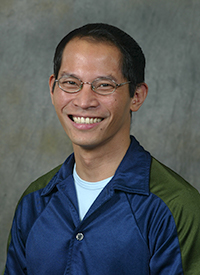
Sidney M. Boquiren
Professor
Music, College of Arts and Sciences
Performing Arts Center 206
516.877.6767
boquiren@adelphi.edu
https://soundcloud.com/user-170499
Professor
Music, College of Arts and Sciences
Performing Arts Center 206
516.877.6767
boquiren@adelphi.edu
https://soundcloud.com/user-170499
Ph.D., Music Composition, Duke University (1999)
B.M., Music Theory and Composition, Butler University (1992)
Department of Music, Adelphi University
September 1, 2021 – Current: Full Professor
September 1, 2011 – August 31, 2021: Associate Professor (with Tenure)
September 1, 2005 – August 31, 2011: Assistant Professor
September 1, 2004 – August 31, 2005: Visiting Assistant Professor
Penn Humanities Forum, University of Pennsylvania
September 2003 – May 2004: Andrew W. Mellon Postdoctoral Fellow
Conducting And Orchestration
First Year Seminar: Bach, Beyonce, And Beyond
Form And Analysis I
Improvisation Ensemble
Theory And Harmony II
Theory And Harmony III
MUSIC THEORY:
Form and Analysis
This course is a study of musical form and structure as exemplified by works drawn primarily from the Western canon. During the semester, students develop a set of skills and a vocabulary that allow them to analyze and discuss various aspects of form and structure in music, which are then applied to analysis of works from their own studio repertoire.
Theory and Harmony I
This course focuses on the fundamentals of reading and notating music, the principles of voice leading, and analyses of brief diatonic harmonic progressions using Roman numerals and lead sheet symbols. Examples studied are drawn primarily from the Western classical canon, supplemented by excerpts from other genres of music such as jazz, rock, and musical theatre.
Theory and Harmony II
This course begins with a review of diatonic chords in both major and minor keys, as well as the basic principles of voice leading and part-writing before proceeding to the analysis of musical examples drawn primarily from the Western classical canon, supplemented by excerpts from popular literature, and ending with the study of non-chord tones.
Theory and Harmony III
This course begins with a review of the principles of diatonic harmony and part-writing, focusing on triads and seventh chords, before proceeding to the study of chromatic harmony, including but not limited to: chromatic chords and progressions, borrowed chords, altered chords, modulation, extended dominants, and modal and nonfunctional harmony.
Theory and Harmony IV
This course focuses on complex chromatic and harmonic principles, particularly Neapolitan and augmented sixth chords, and ends with an overview of harmonic practices in the late 19th Century including extended chromatic tonal harmony and compositional techniques of the 20th Century.
Composition Seminar
This course focuses on the development and application of a variety of compositional techniques. During the semester, students will be required to compose five different projects. The first four of these will each focus on a particular dimension of music (melody, harmony, rhythm, and timbre/texture) while the final one demonstrates the synthesis of all elements into a single cohesive composition.
Conducting and Orchestration
This course is taught in two parts. The first half of the semester focuses on the study of orchestration, including a review of instruments and their technical considerations (ranges, transpositions, basic characteristics, etc.) before moving toward scoring and arranging techniques. Students are required to complete a major orchestration project.
During the second half of the semester, students study the fundamentals of conducting, working toward learning techniques and methods necessary to prepare, rehearse, and perform music as a conductor of various types of musical ensembles. For the final evaluation, students are required to conduct a small ensemble of musicians and/or singers.
Counterpoint
This course is a study of counterpoint, from the modal practice of the Late Renaissance, through tonal counterpoint of the Baroque Period, and imitative polyphony in the 19th and 20th centuries. Students will write their own counterpoint following exemplary and representative models, both modal and tonal.
Independent Studies in Composition and Songwriting
These Independent Studies varied from introductory to advanced levels as well as songwriting and thesis writing. Students worked on various compositional projects appropriate to their level of ability and accomplishment, working toward live performance and/or the workshop of their music.
MUSIC HISTORY
Honors College Liberal Arts Seminar: From Bach to Beck: Understanding Music
Honors College Liberal Arts Seminar: From Bach to Beyoncé: Understanding Music
This multi-disciplinary seminar focuses on the close examination of encounters and experiences with music in various contexts: from live performance to YouTube videos, from music for worship to rock concerts. Through reading, listening, and writing assignments, students will develop a vocabulary and an arsenal of analytical tools as well as methods of inquiry that will help them to explore, study, and critically discuss their experiences of music in a nuanced and sophisticated manner, instead of merely offering a categorical judgment on its supposed quality and value. Reading knowledge of music is not a pre-requisite—just a curiosity and desire to be able to speak and write critically and intelligently about music and how it interacts and merges with other disciplines.
360 Seminar, Music +: Bach, Beyoncé, and Beyond
First-Year Seminar: Bach, Beyoncé, and Beyond
These two multi-disciplinary courses focus on the close examination of and its intersection with other disciplines (psychology, social justice, politics, visual arts, etc.) in a variety of contexts (from live performance to YouTube videos and TikToks, from music for worship to rock concerts). Through reading, listening, and response assignments and projects students will develop the vocabulary, analytical, and methods of inquiry that will help them to explore, study, and critically discuss their experiences of music in a nuanced and sophisticated manner, beyond merely offering a categorical judgment on its supposed quality and value. Musical examples are drawn from a wide diversity of cultures, emphasizing the interconnectedness and common aspects of the human experience of music across a broad range of traditions and practices. Students have the opportunity to bring in their own musical selections for careful study and consideration. Reading knowledge of music is not a pre-requisite—just a curiosity and desire to be able to speak and write critically, cogently, and intelligently about music and how it interacts and merges with other disciplines, and how this is experienced in a diversity of contexts.
MUSIC ENSEMBLE
Improvisation Ensemble
This is a course in musical improvisation without stylistic boundaries. Students research, practice, and develop skills in free and structured improvisation in a variety of styles through performance, listening, and discussion, supplemented by reading and writing assignments. Ability to read music is not required.
MUSIC and IMPROVISATION
Improvisation of music toward building community, developing musicianship skills, and furthering creativity.
MUSIC, WORSHIP, and ETHNICITY
Research into the conveyance, perception, and reception of religious and ethnic identity and practices in music, focusing on the compositions of Jose Maceda, Olivier Messiaen, and Arvo Pärt, and the writings of Anscar Chupungco and Catherine Bell in their work on inculturation and ritual studies.
MULTI-DISCIPLINARY and COLLABORATIVE PERFORMANCE PROJECTS
Creative and performance interest in the production of collaborative projects that involve multiple disciplines and media.
MUSIC of TODAY
Commitment to the study, promotion, performance, and advocacy of works by living composers.
Teaching Philosophy
My teaching philosophy and practice is very much rooted in the belief that deep and sustained learning is best accomplished in an environment that involves active student engagement in a variety of activities that allow students to apply and demonstrate gained knowledge and skills, thereby leading them to develop ownership over what they learn. I am passionate about music theory and how this is practiced and found in a wide variety of musical traditions and experiences, from Bach chorales, to songs from Broadway, and the artistry of Beyoncé. I aim to help students develop a certain proficiency that will allow them to understand, appreciate, and speak intelligently about their varied interactions with music in a more nuanced way. In the classroom, I have adapted and adopted a teaching practice based on Process Oriented Guided Inquiry Learning (POGIL). Originating from the STEM disciplines, I have found that certain practices of POGIL allow for more active student participation in the music classroom. Additionally, the team-based practices that are at the heart of POGIL help students develop process skills such as communication, collaboration, creativity, and critical listening.
MUSIC, WORSHIP, and ETHNICITY
Research into the conveyance, perception, and reception of religious and ethnic identity and practices in music, focusing on the compositions of Jose Maceda, Olivier Messiaen, and Arvo Pärt, and the writings of Anscar Chupungco and Catherine Bell in their work on inculturation and ritual studies.
MULTI-DISCIPLINARY and COLLABORATIVE PERFORMANCE PROJECTS
Creative and performance interest in the production of collaborative projects that involve multiple disciplines and media.
MUSIC of TODAY
Commitment to the study, promotion, performance, and advocacy of works by living composers.
My music has been performed all over the United States as well as the following countries:
Australia
Austria
Canada
France
Germany
Indonesia
Italy
Japan
The Netherlands
The Philippines
Singapore
South Korea
Spain
Sweden
Thailand
United Kingdom
Vietnam
ARTISTIC ACHIEVEMENTS: Commissions (2020 – 2026)
Upcoming and most recent commissions are listed first.
ARTISTIC ACHIEVEMENTS: PERFORMANCES (2020 – 2025)
Most recent performances are given first, followed by previous performances.
Two Odes to Omaha for low voice and piano (2025)
Hardship and Hope for soprano, mezzo-soprano, tenor, and piano (2025)
Three Memories for soprano, tenor, baritone, and piano (2025)
Home Pride for soprano, mezzo-soprano, tenor, baritone, and piano (2025)
Performers:
Rosemary Joyce (soprano)
Alejandra Sandoval (mezzo-soprano)
Gavin Rasmussen (tenor)
Jesse Wohlman (baritone)
Josh Quinn (piano)
Performance:
May 3, 2025, Omaha Conservatory of Music, Omaha, NE
January 10, 2025, soundON Festival of Music, Athenaeum, La Jolla, CA
November 2, 2017, University of San Diego, CA
July 15, 2016, Rajapat University, Mahasarakham, Thailand
March 12, 2011, Adelphi University, Garden City, NY
June 16, 2007, soundON Festival of Music, Athenaeum, La Jolla, CA
November 15, 2024
Coolidge Auditorium, Thomas Jefferson Building, Library of Congress, Washington, D.C.
April 22, 2022, Michaeliskirche, Leipzig, Germany
My Beloved for a cappella mixed chorus (2011),Duke University Chorale
Directed by Dr. Allan Friedman
September 21, 2024
Baldwin Auditorium, Duke University
Durham, NC
SONAM (Singers of New and Ancient Music)
Directed by Dr. Allan Friedman
April 29, 2017
Chapel in the Pines
Chapel Hill, NC
Adelphi University Vocal Ensemble
Directed by Michael Hume
May 6, 2013
Performing Arts Center, Adelphi University
Garden City, NY
August 2, 2024, Ailey Citigroup Theater, New York, NY
July 30, 2024, Mark Morris Dance Center, Brooklyn, NY
July 29, 2024, Flushing Library, Flushing NY
July 26, 2024, Peter Norton Symphony Space, New York, NY
July 25, 2024, Lehman College Studio Theatre, Bronx, NY
July 24, 2024, The Fieldston School, Bronx, NY
Performers:
CeCe Hastreiter (soprano)
Alejandra Sandoval (mezzo-soprano)
Josh Quinn (piano)
Performance:
April 6, 2024,
Omaha Conservatory of Music
Omaha, NE
August 4, 2023, Ailey Citigroup Theater, New York, NY
August 2, 2023, Flushing Town Hall, Flushing, NY
August 1, 2023, Peter Norton Symphony Space, New York, NY
July 28, 2023, Dancewave, Brooklyn, NY
July 27, 2023, Lehman College Studio Theatre, Bronx, NY
July 26, 2023, The Fieldston School, Bronx, NY
Required Piece for the 2023 National Festival of Talents
Himig Bulilit (various choirs)
July 17-21, 2023, Philippines
Evangel Songsters
Directed by Nemuel Danuco
July 7-10, 2017
Orientale Concentus
Singapore
The Voices of Davao (Nemuel Danuco, director): July 22-25, 2015: Andrea O. Veneracion International Choral Festival, Cultural Center of the Philippines, Manila, Philippines
Blessed are the Peacemakers for flute, clarinet, and piano (2017), The Parhelion Trio:March 3, 2023, National Opera Center, New York, NY
February 8, 2019, Arete Venue & Gallery, New York, NY
October 20, 2017, Scholes Studio, Brooklyn, NY
June 29, 2017, Staller Recital Hall, Stony Brook University, Stony Brook, NY
March 4, 2017, Performing Arts Center, Adelphi University, Garden City, NY
Mitchell Giambalvo / Kimi Kawashima (piano)
Keith Carrick / Eric Hopkins (percussion)
February 19, 2023
NOVA Chamber Music Series, “Connect with Hope”
Libby Gardner Concert Hall
Salt Lake City, UT
Chloe Lo / Noah Sonderling (piano)
Francis Favis / Caroline Richards (percussion)
May 1, 2022
Bates Recital Hall, UT-Austin
Austin, TX
Sarah Barham / Georgia Mills (piano)
Alex Richard / Devon Roulston (percussion)
June 15, 2018
Nief-Norf Summer Festival
Knoxville, TN
July 30, 2022, Ailey Citigroup Theater, New York, NY
July 28, 2022, Socrates Sculpture Park, Queens, NY
July 26, 2022, Triskelion Arts, Brooklyn NY
July 25, 2022, Harlem School of the Arts, New York, NY
July 22, 2022, Snug Harbor Cultural Center, Staten Island, NY
July 21, 2022, Abron Arts Center, New York, NY
July 20, 2022, The Fieldston School, Bronx, NY
Originally: May 29 & 31, 2020, New York, NY
Online premiere: June 10, 2021
In-person premiere:
May 1, 2022, St. Ignatius of Antioch, New York, NY
July 31, 2021, Livestream Finale Concert by CultureHub, New York, NY
July 28, 2021, Socrates Sculpture Park, Queens, NY
July 27, 2021, Bronx Academy of Arts and Dance, Bronx, NY
July 23, 2021, Culture Lab LIC, Queens, NY
July 21, 2021, The Plaza at 300 Ashland, Brooklyn, NY
December 16, 2020, Virtual Marathon in Celebration of Beethoven’s 250th Anniversary (livestream)
November 15, 2020, Neskowin Chamber Series, Pacific City, OR (rescheduled)
November 12, 2020, Tassel Performing Arts Center, Holdrege, NE
November 8, 2020, Cecilian Chamber Series, Regina, Canada (rescheduled)
November 5, 2020, Adelphi University, New York, NY (online livestream)
October 20, 2020, Freer Gallery, Washington, D.C. (online broadcast)
June 11, 13, and 15, 2019, Havana, Cuba (rescheduled)
March 3, 2020, Glema Mahr Center for the Arts, Madisonville, KY
October 28, 2019, Hudson Valley Music Club, Dobbs Ferry, NY
September 17, 2019, Southwestern University, Georgetown, TX
July 2, 2019, Bloomington, IN
June 2, 2019, Museum of Fine Arts, St. Petersburg, FL
April 23, 2019, Sarah Lawrence College, Bronxville, NY
March 15, 2019, Kerrytown Concert House, Ann Arbor, MI
January 26, 2019, Wesleyan University, London, Ontario, Canada
January 24, 2019, The Mansion at Strathmore, North Bethesda, MD
August 1, 2020, Ailey Citigroup Theater, New York, NY
July 30, 2020, University Settlement, New York, NY
July 29, 2020, Symphony Space, New York, NY
July 28, 2020, Kumble Theatre at LIU-Post, Brooklyn, NY
July 26, 2020, RIOULT Dance Center, Queens, NY
July 24, 2020, 92nd St. Y, New York, NY
July 23, 2020, Ethical Culture Fieldston School, Bronx, NY
Rescheduled (online events, via Zoom):
August 1, 2020; July 30, 2020; and July 29, 2020
April 3, 2020, San Diego, CA (YouTube livestream)
November 2, 2017, University of San Diego, CA
January 26, 2020, RB Community Church, San Diego, CA
November 14, 2019, Shiley Hall, University of San Diego, San Diego, CA
ARTISTIC ACHIEVEMENTS: Completed Compositions (2020 – 2025)
CHAMBER
Manlalakbay for flute/b. flute, clarinet/b. clarinet, bassoon, percussion, guitar, and piano (2025) Manlalakbay for flute/b. flute, clarinet/b. clarinet, percussion, guitar, piano, and cello (2024) Three Meditations for flute, clarinet, violin, and cello (2024) Ira et Lachrymae version for violin and viola (2013/2024) The Book of Mourning, Quarto I: Veil version for flute, clarinet, violin, and cello (2012/2021) Five Prayers of Hope for violin, viola, piano, and guitar (2020)VOCAL
Two Odes to Omaha for low voice and piano (2025) Hardship and Hope for soprano, mezzo-soprano, tenor, and piano (2025) Three Memories for soprano, tenor, baritone, and piano (2025) Home Pride for soprano, mezzo-soprano, tenor, baritone, and piano (2025) Seven Songs of Discovery for soprano, mezzo-soprano, and piano (2024) Psalm 42 for baritone and piano (2022) Thorny Songs for soprano and piano (2022) Lux for soprano and finger cymbals (2020)CHORAL/VOCAL ENSEMBLE
Ave Maria for a cappella mixed chorus (2016; revised 2024) Set Me as a Seal version for mixed chorus, violin, and piano (2017/2024) Home is… for mixed chorus and piano (2024) Hail Mary (Ave Maria) for mixed chorus and piano (2022) I Too Was Loved by Daphne for male vocal quintet (2022) Arise for mixed chorus, flute, and percussion (2021) Hail Mary (Ave Maria) for women’s chorus and piano (2020)KEYBOARD
Agos for solo piano (2025)ELECTRONICS
Girl in the Waves for fixed media (2025) Paghihirap, Pagsisikap, at Pagpupunyagi for string quartet and fixed media (2024) Don’t Look Back for fixed media (2024) A Mother’s Love for fixed media (2023) Split in Two for fixed media (2022) Behind the Mind for fixed media (2021) Unity for fixed media (2020)
PODCASTS, PRESENTATIONS, SEMINARS, and WEBINARS
2025 AMS-SMT Joint Annual Meeting, Minneapolis, MN, November 6-9, 2025: (“Developing a Student-Centered Approach to Classroom Learning”) with Dr. Ashley Pribyl The National Conference to Advance POGIL Practice (NCAPP), Emory University, Atlanta, GA, June 22-25, 2025: “Birds of a Feather: Interdisciplinary Activities and Alternative Models” POGIL eSeries. April 23, 2025 (online webinar): “Empowering Through Language: Asset-Minded Approaches in the Classroom” The National Conference to Advance POGIL Practice (NCAPP), University of Utah, Salt Lake City, UT, June 26-28, 2023: “Birds of a Feather: POGIL Activity Models in Non-STEM Disciplines” College Music Society (CMS), Northeast Regional Conference, Southern Connecticut State University, New Haven CT, March 11, 2023: “Process-Oriented Guided Inquiry Learning (POGIL): a Flexible Method for Music Instruction” Teaching & Learning Conference, Adelphi University, Garden City, NY, February 16, 2023: “Active Learning in the Classroom” POGIL Podcast, December 5, 2022: “What If a POGIL Activity Doesn’t Exist?” Composer Presentation, Duke University: October 9, 2020 Composer Presentation, Butler University: September 24, 2020 Hawaii International Conference on Education, Panel Presentation, “Curricular-izing Improvisation: Considering Improvisation Across the Undergraduate Music Curriculum”: January 11, 2020GRANTS
POGIL SPUR+ Grant. Granted, $2500. 2024-2025. With Dr. A. Pribyl and Dr. J. Pribyl.
Adelphi University Faculty Development Grant for “Two Recording Projects.” Granted, $5,000. 2021-2022.
Young Dancemakers Company Choreographer/Composer Project. New Music USA. $4000. Granted, 2018. Declined, 2019 and 2020.
32 Bright Clouds. Commissioned as one of the 32 international composers. New Music USA. Declined, 2018.
New Musical Geographies. Commissioning project for new works for the khaen (Lao/Thai bamboo mouth organ). New Music USA. Declined, 2018.
Independence Eve. A chamber opera on race relations in America. American Opera Projects. New Music USA. Declined, 2017.
Synaesthesia: an Inter-Sensory Experience. Multi-media collaboration. New Music USA. Declined, 2016.
The New American Art Song. With vocalist/writer Daniel Neer. New Music USA. Declined, 2014.
Adelphi University Faculty Development Grant for pulsoptional Residency (New York, NY). Granted, $5,000. March 8-11, 2012.
Adelphi University Faculty Development Grant for “Babaylan: a New Work for Khaen, Flute, and Cello” (New York, NY). Granted, $5,000. March 10-13, 2011.
HONORS, AWARDS, FELLOWSHIPS, and RESIDENCIES
2025 POGIL PEACH (POGIL Early Achievement) Award
Featured Composer, soundON Festival (San Diego, CA): January 2026, January 2025, and June 2011
ASCAP Plus Award Recipient (Concert Division): 2006 – 2025
Panelist/Judge, First Round Review of Submissions, The American Opera Project’s Composers & the Voice Program: 2023-2025, 2021-2023, and 2019-2021
Faculty Excellence in Creative Works Award, Adelphi University: May 5, 2021
Wentworth Residency with the Weiss-Kaplan-Stumpf piano trio at Sarah Lawrence College: 2019
Panelist/Judge, Cerddorion Choral Composition Contest: 2025, 2019, and 2017
Guest Composer, Nief-Norf Summer Festival: 2018
Residency with pulsoptional at Sonoma State University: 2018
Residency with violinist Sarah Plum at Duke University: 2018
Residency with pulsoptional at the University of Wisconsin-Oshkosh: 2017
Featured Composer, New Music for Strings Festival: 2017
Residency with pulsoptional at Adelphi University: 2012
Residency with pulsoptional at Indiana University-South Bend: 2012
Ruth Boshkoff OAKE Composition Commission Prize: 2012
Residency with pulsoptional at Adelphi University: 2012
Residency with pulsoptional at the North Carolina School for Sciences and Mathematics: 2012
Composer Fellow, American Opera Project’s Composers and the Voice Series: 2011 - 2012
ACADEMIC and PROFESSIONAL SOCIETIES: Memberships
American Composers Forum (ACF)
American Society of Composers, Authors, and Publishers (ASCAP)
College Music Society (CMS)
New Music USA
Society for Music Theory (SMT)
SERVICE: School/Department
African, Black, and Caribbean Studies Unit Peer Review Committee (2021 – current). Member, 2021-2023. Chair, 2021-current.
Performing Arts Unit Peer Review Committee (2012 – 2019; 2021 – current). Member. Chair: Professor Adelheid Strelick
General Education, Arts Subcommittee (2011 – current). Member. Chair: Professor Peggy Cassidy
Chair, Music Education Search Committee (2021 – 2022).
Chair, Department of Music (2013 – 2017; 2018 – 2023). Six credits release time per year.
CAS Dean Search Committee (2018 – 2019). Member. Chair: Professor Brian Lym (University Libraries, Dean)
Academic Affairs Committee, College of Arts and Sciences. Member. 2004 – 2013. Past Chair: Professor Sean Bentley
SERVICE: University
Faculty Senate (2021-2022). Parliamentarian and Departmental Faculty Senator.
Search Committee, Director of Environmental Health and Safety (Fall 2021). Member.
Faculty Mentor for Portfolio Intensive (January 20-21, 2021). Invited by FCPE Assistant Director, Nathan Ross.
Adelphi University High Impact Practices Team (2019 – current). Member.
Faculty Committee on Retention, Tenure, and Promotion (2017 – 2020)
Chair, 2019 – 2020 (release time: 3 credits as Member and 3 credits as Chair)
Secretary, 2018 – 2019 (release time: 3 credits as Member and 3 credits as Secretary); Chair: Professor Philip Rozario
Secretary, 2017 – 2018 (release time: 3 credits as Secretary); Chair: Professor Mara Manson
COVID-19 Restart Team, Academic Restart Task Force, Classes Subgroup (2020). Member. Co-Chairs: Associate Provosts Liz Ciabocchi and Chris Storm
Middle States Working Group: Planning, Resources & Institutional Improvement (2017 – 2019). Member. Co-Chairs: Professors Lawrence Hobbie and Peter West; Lori Hoeffner, Director of Assessment
Faculty Senate (2016 – 2017). Member-at-Large, Parliamentarian.
Faculty Senate Executive Committee (2015 – 2016; 2017 – 2018). Member. Chair: Professor Beth Christensen; Previous Chair: Professor Devin Thornburg
Strategic Enrollment Group (2016 – 2017). Member. Co-Chairs: Provost Sam Grogg and Associate Vice President Kristen Capezza
Undergraduate Enrollment Working Group (2015 – 2016). Member. Chair: Associate Vice President Lauren Mounty
Sociology UPRC (2015 – 2017). Member. Chair: Professor Deborah Little; Previous Chair: Professor Jessie Klein
Inauguration Committee (2015 – 2016). Member and Co-Chair of the Programming Subcommittee. Chair: Vice President Lori Duggan-Gold
Faculty Advisor, S.A.R.A.P. (Student Appreciation and Recognition of Adelphi Pinoys). 2014 – 2015
Co-organizer (with Professor E. Zarco and Dean D. Hudson), Philippine Relief Fund. 2013 – 2014. In response to Super Typhoon Haiyan which struck the Philippines in early November 2013, Professor Zarco, Dean Hudson, and I organized the collection of funds across the university to assist in the relief efforts for the victims and survivors.
Senate Faculty Committee on the Assessment of Administrators. Member. 2010 – 2012. Co-Chairs: Associate Provost Audrey Blumberg and Professor Devin Thornburg. This committee was tasked with the development of an evaluation form for the performance assessment of University Deans.
CAS Strategic Planning Committee. Member. 2011 – 2012. This committee, led by then-Associate Dean Susan Briziarelli, met regularly to collect information on current practices and to develop strategic plans that followed the primary goals of AU 2015.
Task Force on Mapping Learning Goals. Member. 2009 – 2013. Co-Chairs: Professors Regina Axelrod and Sean Bentley. This Task Force endeavored to map across university curricula how the Adelphi’s General Education Learning Goals are being taught and learned with the goal of making recommendations for possible implementation.
OTHER SERVICE ACTIVITIES (not mentioned above)
I will be serving as one of two co-chairs for the National Conference to Advance POGIL Practice scheduled for June 2027.
On September 30, 2025, I was one of three featured speakers invited by Pax Christi to present on the “Nonviolence and the Ars,” which was sponsored by the Catholic Nonviolence Initiative.
On February 19, 2025, I served as one of the moderators for the workshop on “High Impact Practices in Undergraduate Research” sponsored by the Office of Undergraduate Research and Creative Works.
In November 2024, I visited Dr. Melanie Bush’s Seminar 360 course on “Love, Home, and Belonging,” presenting on the relationship between music and concepts/understandings of “home.”
In 2023, I served as a peer reviewer for Oxford University Press for the book proposal by Dr. Jake Johnson, The Music Room: A Story of Art, Friendship, and Gathering in Betty Freeman’s Beverly Hills Home.
Since the fall of 2021, I have served on several working groups for the POGIL Project. In the fall of 2022, I was a member of the POGIL Impact Award selection committee. I was a co-facilitator of a 3-Day POGIL Workshop at Simmons University (Boston, MA).
In the fall of 2022, I was invited by Dr. Vincent Wang, Dean of the College of Arts & Sciences, to work with Professor Lahney Preston-Matto in determining ways to reduce the number of Unit Peer Review Committees in the College of Arts & Sciences at Adelphi University.
I was the primary author for the External Program Review Team evaluating the Performing Arts: Music program offered by the Department of Music at Nassau Community College. The review was held (with via Zoom due to the pandemic) on March 17, 2021, and our report submitted on March 31, 2021.
In spring 2022, I organized students in composing and performing a live performance of original compositions with commentary by the executive director of the WWBA, after collaborating with multiple departments for the bicentennial celebration of Walt Whitman’s birth (with the Departments of Art and Theatre) in the summer of 2019 that led to performances at the Walt Whitman Birthplace Association,
Since 2017, the Department of Music has provided the music for an annual event sponsored by the Cradle of Aviation and held in their planetarium. Music and Astronomy Night combines astronomy films with live music, performed, and also often composed by students of the department. I have been involved in three of these four years, inviting student performers, organizing rehearsals, and also performing alongside our students. This collaboration continued on its fifth year in February 2021, delivered as an online livestream experience for the audience, returning for its sixth year as a live performance in March 2022, attracting an audience of 120+ individuals. Starting in the spring of 2023, the Improvisation Ensemble (which I direct) has been the featured ensemble for this collaboration.
In the fall of 2020, I was invited by then-Associate Provost Chris Storm to join present and past FCRTP chairs to discuss “developmental processes to support promotion eligible faculty.”
On February 21, 2019, I served as a panelist for the The Soapbox Series: Consent, sponsored by the Department of English.
In previous years, I have been on the panel for the review of candidates for the President’s Student Leadership Award. Members of this panel read through and evaluated applications, and joined other panel members (faculty members, administrators, and graduate students) in interviewing finalists for this award before making final recommendations to the President. I have returned to this panel for a couple of years but have been unable to rejoin recently.
Since 2007, I have been involved with the Collaboration Project primarily as an organizer of performance events focused on the particular theme for that year such as “Women, Peace, and Justice” (2007) and “Wake Up Everybody, Today is a New Day” (2017). For the latter, I collaborated with a team on selecting the repertoire, invited participants, led rehearsals, and handled logistics for the event.
Upon invitation in the spring of 2015, I joined the Ignatian Schola, a chamber choir that is regularly invited to provide the choral music for the Eastern Province of the Jesuit Order of the Roman Catholic Church. For this group, I have performed both as a singer and as a pianist.
Since 2012 I have been a member of the choir at The Church of St. Francis Xavier in Manhattan. I have taken on additional duties (such as accompanying the choir, singing in a quartet or as soloist, being the cantor for mass, as well as conducting the choir and bell choir) as requested by the church’s Music Director, John Uehlein. The choir has also sung my music.